In September, I taught the first class in a series on old-school protection and new science. What I mean by protection is actually pretty broad: the potential threats and negative powers one might encounter, particularly in the psycho-mental, emotional, and spiritual category, and what we can do about them. I think it's an interesting place to discuss how ancient cultures and different traditions, folk traditions and spiritual traditions, have approached these topics, and what modern science is starting to say. If we were to think of this as a mansion with many rooms in it, there are many rooms and many places we could go.
I got messages afterward from people really interested in the nocebo effect and also the power of the subconscious, and in the concepts of agency, self-confidence, and the refusal of "victimhood" or vulnerability. So that is where this letter goes.
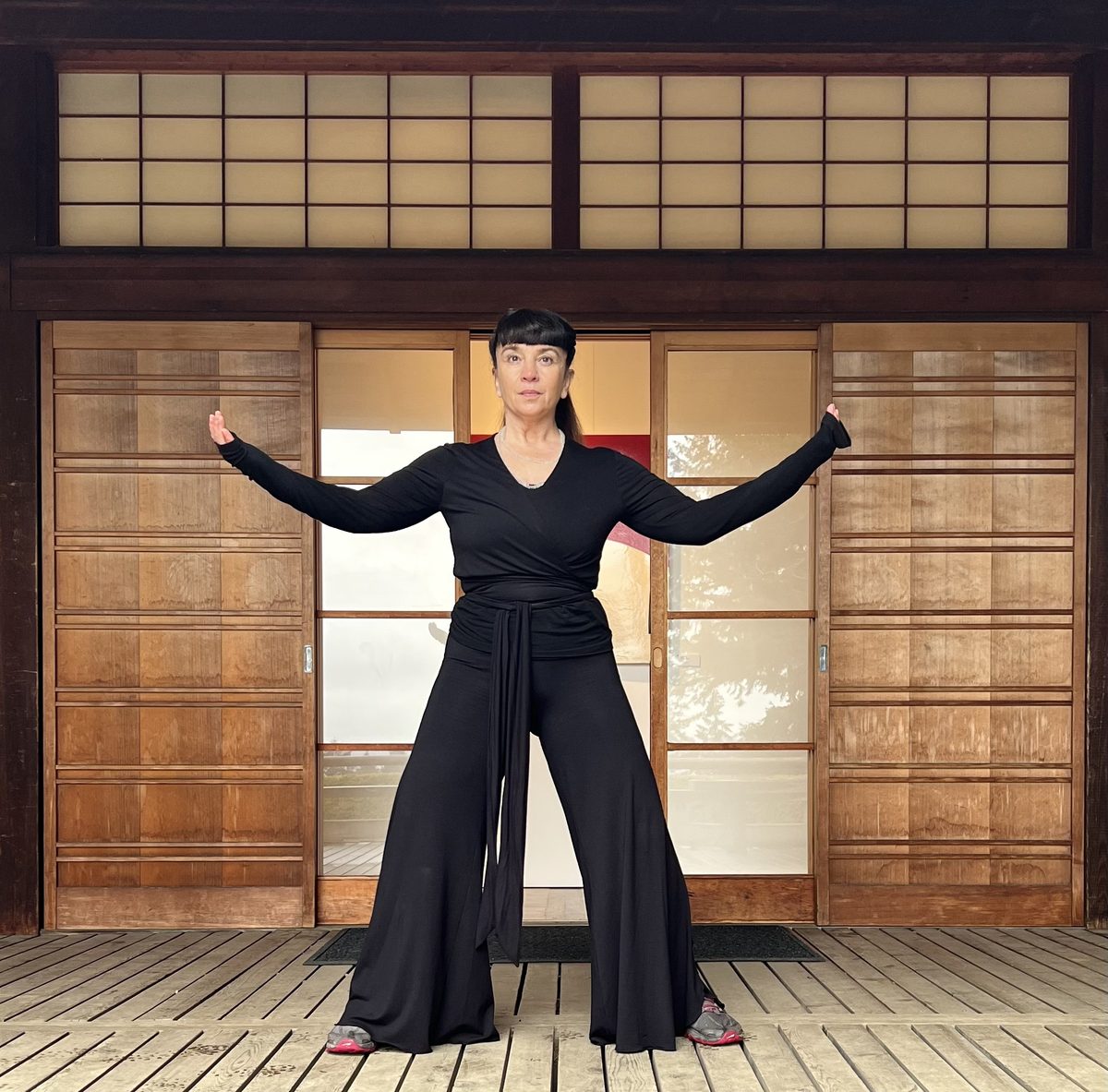
The light side and the dark side of belief
Before we talk about negative influences and threats of different kinds, I want to talk about some fundamental principles that I think serve us well when we go into this topic. The first is the concept in medicine of the nocebo effect.
We've all heard about the placebo effect, which, if you will, is the light side, the positive side, of using belief to change our experience in our body: to change our biochemistry, our immune system, our neurotransmitters, our emotional state, our experience of pain or disease or inflammation. The idea of the placebo effect, simply put, is that if we believe something is going to help us, then it very likely will.
Now, the nocebo effect is basically the negative side of that. If you believe something is going to harm you, then you might, in fact, experience harm. It doesn't mean for sure that the negative thing is going to occur. But the expectation of a negative experience can very likely increase the chance.
- In a trial of 140 women about to have an epidural, describing the numbing shot as a sting, rather than in reassuring words, raised their pain from 3 to 5 out of 10.
- Men told about a prostate drug's possible sexual side effects reported them nearly three times as often as men who weren't told (44% vs. 15%).
- Expecting relief doubled the effect of a strong opioid painkiller; expecting it to fail erased the effect.
- Knowing how it works helps: in a trial with 100 chemotherapy patients, a short explanation of the nocebo effect reduced their side effects at 12 weeks.
Who is most affected
It turns out that we, as human beings, have different capacities to experience the results of our belief, and different aspects of ourselves will influence how much a belief, positive or negative, might impact us. One of those aspects is how empathetic we are. People who score high on empathy are more likely, both positive and negative, to be affected by witnessing someone having an experience. If you witness people having an experience, in a healing event, a ceremony, a ritual, a prayer group, even in media or on TV, in a church, or in a family dynamic, and you are highly empathetic, you are more likely to adopt that experience yourself. This is also true with negative experiences. If you see somebody suffering, in pain or in fear, if you see someone being attacked, abused, or cursed, in the old ways, you might be more vulnerable to having that negative experience yourself.
And regardless of where you fall on the empathetic scale, there are two powerful levers in terms of connectedness. One, and probably the most powerful, is feelings of love and compassion. The other is being able to identify with the other. If you are connected by these ties, of love, of compassion, of family relationship, of "I see myself in them" or "I see them in me," you are more likely to share in someone's healing, and more likely to be vulnerable to experiencing a similar negative effect as well.
- We learn pain and relief by watching. People who watched someone else get relief felt about as much relief as people who experienced it themselves, and more than people who were only told to expect it.
- Across 20 studies, watching others have bad outcomes produced a medium-to-large nocebo effect, stronger face to face and in more empathic observers.
- A frightening TV report about Wi-Fi raised symptoms after a fake exposure in anxious viewers.
- Stress spreads most between people who love each other: 40% of people watching their partner go through a stress test had a significant rise in the stress hormone cortisol, compared with 10% of those watching a stranger.
- Holding a partner's hand during pain eased it, and the couple's brain activity synchronized.
Words, rhythm, and expectation
We are sensitive, in both good and bad ways, to the power of words, and some kinds of words and styles of words entrain our nervous system more powerfully than others. The Ave Maria, and certain kinds of Indian mantras, actually entrain the body. The rhythm and the style and the way the words are crafted create deep autonomic nervous system states, deeper and slower breathing, and theta states in the brain. When you slow your breath down to about six breaths per minute, you are bringing yourself into a state where you can affect your own beliefs and your expectations more powerfully. And when we are chanting, doing prayers, or doing mantras together, we entrain as a group, with our breaths, our heart rates, and our brain states.
So it turns out that what we expect to occur is what we really mean by the power of belief. And we expect things subconsciously.
- Reciting the rosary and a yoga mantra both slowed breathing to about six breaths a minute and strengthened the heart's rhythms.
- In a choir, singers' breathing and heart rhythms synchronized, most of all when they sang in unison.
- A review of 24 studies of chanting, mantra, and prayer found increased theta activity in the brain.
The subconscious outweighs words
It looks like our subconscious beliefs are often more powerful than our conscious beliefs. There's a place in our subconscious mind that is communicating with our physical bodies: our heart rates, our breath patterns, but also our fascia, our neurotransmitters, our hormones, our immune system, and how sensitive we are to pain.
Think of a Pavlovian response: hear the bell, give the food, and dogs learn to salivate in anticipation of food coming. Our bodies can be trained the same way to expect pain relief, or pain.
The words a doctor chooses to say, and the words we tell ourselves, can affect how our body behaves. So words do set expectation, but not as strongly as training the subconscious body-mind to expect things. If you just tell yourself, "I'm not going to feel the pain," that won't be, for most people, as powerful as if you have trained your subconscious to expect pain relief. Just saying words sets an expectation, but it's not necessarily enough to counteract deep subconscious belief patterns. We can think in terms of trauma patterns, and childhood expectation patterns. However, we can also think in terms of positive entrainments. We can train ourselves to feel in command of our own experiences, regardless of external input.
- In one study, people received a painkiller by injection on two days. The next day, a saltwater injection given the same way relieved their pain, even when they were told it was an antibiotic.
- Stress hormones followed a conditioned response even when the spoken suggestion said the opposite.
- Pain relief trained over four days held up even after people learned there had never been a drug. One day of training didn't.
- Repeating a positive self-statement made people with low self-esteem feel worse.
Where the power lives
One can be both highly empathetic and also sovereign, and invulnerable to certain kinds of threat or nocebo effects. So what makes us resistant?
One of the most important things is to believe in your own agency, your own power. If you believe that your power to determine your fate lies within you, or in some power you can call upon, then you are highly resistant to ill intent, or "curses," whether we mean them in mundane terms or in more esoteric spiritual terms. These are not incompatible. You can have both at the same time. For a lot of people, it's a combination of having supreme confidence in their own agency and ability to decide, and in where they also might draw power from.
So the key is that you are not a victim. And what does decision mean? The root essentially means that there is no other option. You have made a decision. You have an expectation of only one outcome. (The Latin root, decidere, means "to cut off." And victim comes from the Latin victima, a sacrificial offering.)
I'll speak for myself. I believe there's a lot of power in a lot of places. I believe in the power of science. I believe in the power of different kinds of medicine. But I also believe in The All and the Everything, which in my deepest sense is a kind of awareness of the primordial substrate of consciousness/being manifesting into the architecture of reality. Some would call this God. When I have encountered all different kinds of negative influences, I have had a bedrock certainty and expectation that I and my soul are one, and my soul and The All and the Everything are one; a powerful sense of alignment, that nothing can make me a victim, fundamentally, because my will for good, my will for healing, my will to protect myself and others, is stronger than all other wills; and, should I need assistance even greater than my own will, a bedrock, ultimate, complete certainty that my prayer, my ask, will be answered. This powerful combination has allowed me to deal with many situations.
In many traditions, the prayers designed to resist dark forces carry a request, but there is also a compelling, a commandment. When we're dealing with things trying to overtake our reality, negative will directed at us, consciously or subconsciously, the response needs to be a statement of command, a statement of expectation, a declaration of what you are deciding will be and will not be. You are not going to be a victim, and you are going to command the scene.
- When people controlled a painful stimulus themselves, it hurt less and caused less anxiety than the identical stimulus controlled by someone else.
- Control is learned: in animals, an early experience of control protected against later helplessness.
- In people with cancer, coping by working with God, or by trusting God with what they couldn't control, went with better adjustment, partly through a stronger sense of self-efficacy.
Street cred with yourself
If we weren't raised with it, and didn't have experiences where we built incredible self-command and self-belief, we can reclaim that level of power, but often we need to do that over time and with repetition. Personal power is training yourself to be in alignment: conscious, subconscious, body, emotion, our words, our actions. When we choose something, we can back it up. And the beginning of that is deciding: I'm going to do a thing. You make a commitment to do a thing, and then you do the thing. You're building, essentially, street cred with yourself.
You can start with super simple things. If you've spent the past months or years saying to yourself, "I'm going to go for a walk every day," and you keep never going for the walk, then you are literally training your subconscious not to believe your words. So instead, go for the walk. Maybe a ten-minute walk. Promise yourself you're going to go for a ten-minute walk, and then actually go for the ten-minute walk. If you do this over weeks, over months, you are building an expectation in your subconscious mind-to-body connection that your word is law. The more often you fulfill mind, heart, word, action as one directed force, the more you build power.
- Confidence grows most from lived success, ahead of encouraging self-talk.
- A new daily habit takes a median of about two months to feel automatic, and anywhere from four days to nearly a year.
- Picturing the goal, naming the obstacle, and making an if-then plan works better than positive thinking alone.
Start here
To have great personal power means finding inside yourself where you are in dissonance, picking one thing to start, and resolving that dissonance. We're not talking about greater truths, what the final truths are. We're talking about correcting a dissonance inside of yourself, where you feel you're not being truly true to something you hold core. Be more true to yourself. Not to other people, not to other expectations. That's step one. Start with easy, low-hanging-fruit things, and build, day after day. That builds personal power for the deeper, harder work of changing subconscious belief patterns.
- Keep one small promise to yourself, every day. A ten-minute walk, say. Keep it for weeks.
- Resolve one dissonance. Find one place you're not being true to something you hold core, and start there.
Next time
In the next class, we'll explore techniques and practices.
— Dr. Sara Hazel
- Varelmann D, et al. Nocebo-induced hyperalgesia during local anesthetic injection. Anesth Analg, 2010 — randomized trial, 140 women before an epidural: describing the injection as a sting, rather than in reassuring words, raised median pain from 3 to 5 out of 10. doi
- Mondaini N, et al. Finasteride 5 mg and sexual side effects: how many of these are related to a nocebo phenomenon? J Sex Med, 2007 — randomized trial, 107 men completing: those told about possible sexual side effects reported them nearly three times as often (43.6% vs 15.3%). doi
- Bingel U, et al. The effect of treatment expectation on drug efficacy: imaging the analgesic benefit of the opioid remifentanil. Sci Transl Med, 2011 — healthy volunteers on a fixed dose: expecting relief doubled the opioid's pain-relieving effect; expecting it to fail erased it. doi
- Michnevich T, et al. Preventing adverse events of chemotherapy for gastrointestinal cancer by educating patients about the nocebo effect: a randomized-controlled trial. BMC Cancer, 2022 — randomized trial, 100 patients: a brief explanation of the nocebo effect reduced side-effect intensity at 12 weeks. doi
- Colloca L, Benedetti F. Placebo analgesia induced by social observational learning. Pain, 2009 — healthy volunteers: watching someone get relief produced pain relief as large as experiencing it directly, larger than being told to expect it, and rising with empathy. doi
- Saunders C, et al. The effect of social learning on the nocebo effect: a systematic review and meta-analysis with recommendations for the future. Health Psychol Rev, 2024 — 20 studies, 1,388 people: watching others' bad outcomes produced a medium-to-large nocebo effect, stronger face to face and in more empathic observers. doi
- Witthöft M, Rubin GJ. Are media warnings about the adverse health effects of modern life self-fulfilling? An experimental study on idiopathic environmental intolerance attributed to electromagnetic fields (IEI-EMF). J Psychosom Res, 2013 — 147 people randomized: a TV report on Wi-Fi dangers raised symptoms after a fake exposure in anxious viewers. doi
- Engert V, et al. Cortisol increase in empathic stress is modulated by emotional closeness and observation modality. Psychoneuroendocrinology, 2014 — 211 observers: 40% of those watching a partner go through a stress test had a significant cortisol rise, compared with 10% watching a stranger. doi
- Goldstein P, et al. Brain-to-brain coupling during handholding is associated with pain reduction. Proc Natl Acad Sci U S A, 2018 — romantic couples: holding hands during pain increased brain-to-brain coupling, which tracked pain relief. doi
- Bernardi L, et al. Effect of rosary prayer and yoga mantras on autonomic cardiovascular rhythms: comparative study. BMJ, 2001 — 23 healthy adults: the Ave Maria and a mantra, recited about six times a minute, amplified heart rhythms and raised baroreflex sensitivity. doi
- Müller V, Lindenberger U. Cardiac and respiratory patterns synchronize between persons during choir singing. PLoS One, 2011 — 11 singers and a conductor: breathing and heart-rate variability synchronized across the choir, most in unison. doi
- Perry G, et al. Neural Correlates of Chanting: A Systematic Review. Wiley Interdiscip Rev Cogn Sci, 2025 — review of 24 studies of chanting, mantra, and prayer: EEG studies showed increased theta activity. doi
- Amanzio M, Benedetti F. Neuropharmacological dissection of placebo analgesia: expectation-activated opioid systems versus conditioning-activated specific subsystems. J Neurosci, 1999 — 229 volunteers, laboratory arm pain: after morphine or ketorolac was injected on two days, a saltwater injection given the same way relieved pain, even in groups told it was an antibiotic. doi
- Benedetti F, et al. Conscious expectation and unconscious conditioning in analgesic, motor, and hormonal placebo/nocebo responses. J Neurosci, 2003 — growth hormone and cortisol followed a conditioned response regardless of what people were told. doi
- Schafer SM, et al. Conditioned placebo analgesia persists when subjects know they are receiving a placebo. J Pain, 2015 — healthy volunteers: pain relief trained over four days held up after people learned no drug was ever given; one day of training did not. doi
- Wood JV, Perunovic WQE, Lee JW. Positive self-statements: power for some, peril for others. Psychol Sci, 2009 — people with low self-esteem felt worse after repeating a positive self-statement. doi
- Wiech K, et al. Anterolateral prefrontal cortex mediates the analgesic effect of expected and perceived control over pain. J Neurosci, 2006 — brain imaging: pain people controlled themselves hurt less and caused less anxiety than identical pain controlled by someone else. doi
- Maier SF, Seligman ME. Learned helplessness at fifty: Insights from neuroscience. Psychol Rev, 2016 — review of largely animal research: passivity is the default under prolonged stress, control is learned, and an early experience of control protected against later helplessness. doi
- Nairn RC, Merluzzi TV. The role of religious coping in adjustment to cancer. Psychooncology, 2003 — 292 people with cancer: coping by collaborating with or deferring to God was linked to better adjustment, partly through self-efficacy. doi
- Online Etymology Dictionary: decide · decision · victim
- Egele VS, et al. An empirical ranking of the importance of the sources of self-efficacy for physical activity. Health Psychol Behav Med, 2025 — survey, 335 adults: lived success was the strongest source of confidence to be active, ahead of encouraging self-talk. doi
- Singh B, et al. Time to Form a Habit: A Systematic Review and Meta-Analysis of Health Behaviour Habit Formation and Its Determinants. Healthcare (Basel), 2024 — 20 studies, 2,601 people: habits took a median of about two months to become automatic, ranging from 4 to 335 days. doi
- Duckworth AL, et al. From Fantasy to Action: Mental Contrasting with Implementation Intentions (MCII) Improves Academic Performance in Children. Soc Psychol Personal Sci, 2013 — randomized trial, 77 fifth-graders: picturing the goal, naming the obstacle, and making if-then plans beat positive thinking. doi · Wang G, Wang Y, Gai X. A Meta-Analysis of the Effects of Mental Contrasting With Implementation Intentions on Goal Attainment. Front Psychol, 2021 — 21 studies, about 15,900 people: a small-to-moderate benefit. doi